Apes Unit 3 Study Guide: An Overview
This unit explores primate evolution, hominin origins, and the emergence of Homo sapiens, utilizing advanced conversational AI like ChatGPT for learning․
Welcome to Unit 3! This section delves into the fascinating world of primate and hominin evolution, charting the long and complex journey that ultimately led to modern humans․ We will explore the key milestones in our ancestry, examining fossil evidence and utilizing cutting-edge dating techniques to reconstruct the past․
Understanding primate taxonomy is crucial, as it provides the framework for comprehending our place within the natural world․ We’ll investigate the characteristics that define primates and how these traits have evolved over time․ Furthermore, we’ll leverage tools like ChatGPT – an advanced conversational AI – to enhance our understanding of complex concepts and engage in interactive learning․ This unit aims to provide a comprehensive overview of human origins, fostering critical thinking and a deeper appreciation for our evolutionary heritage․
Primate Evolution and Taxonomy
Primates are characterized by traits like grasping hands and feet, large brains relative to body size, and forward-facing eyes providing stereoscopic vision․ This evolutionary path began over 65 million years ago, diverging from other mammals․ Taxonomy organizes primates into prosimians (lemurs, lorises, tarsiers) and anthropoids (monkeys, apes, and humans)․
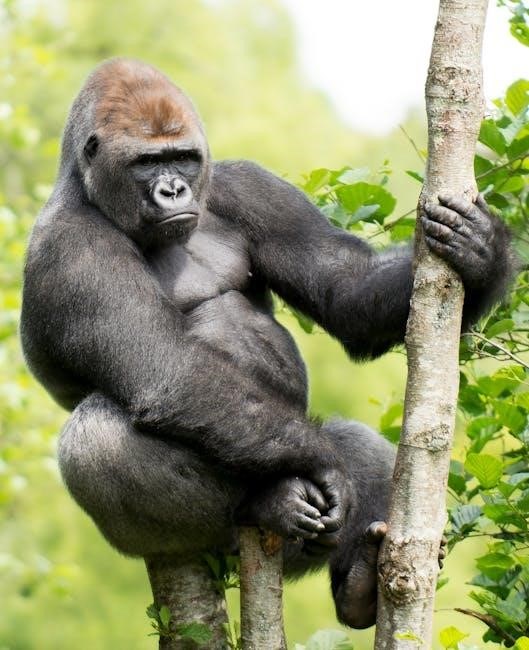
Apes – including gibbons, orangutans, gorillas, chimpanzees, and humans – represent a further refinement of primate characteristics, exhibiting increased brain size and complex social behaviors․ Understanding the phylogenetic relationships between these groups is vital․ Tools like ChatGPT can aid in visualizing these complex relationships and exploring the adaptive pressures that shaped primate evolution, offering interactive learning experiences and clarifying taxonomic classifications․

Hominin Evolution: Key Concepts
Hominin evolution centers on bipedalism, brain size increase, and tool use, charting the lineage from early ancestors to modern humans, aided by AI tools․

Dating Methods in Paleoanthropology
Establishing a chronological framework is crucial in paleoanthropology, and scientists employ diverse dating techniques to determine the age of fossils and archaeological sites․ These methods fall into two primary categories: radiometric and relative dating․ Radiometric dating leverages the decay of radioactive isotopes – like carbon-14 or potassium-argon – to calculate age, providing numerical dates․ This is particularly useful for older specimens․
Relative dating techniques, conversely, determine age by comparing the position of fossils within sedimentary layers or through biostratigraphy (comparing fossil occurrences)․ While not providing precise ages, they establish a sequence of events․ Understanding these methods is vital for interpreting the timeline of hominin evolution and contextualizing discoveries, especially with the aid of modern AI analysis․
Radiometric Dating

Radiometric dating relies on the predictable decay rates of radioactive isotopes found within geological strata and fossil remains․ Methods like potassium-argon dating are employed for very old samples – millions of years old – analyzing the ratio of potassium-40 to argon-40․ Carbon-14 dating, useful for more recent organic materials (up to around 50,000 years), measures the decay of carbon-14․
Each isotope has a known half-life, allowing scientists to calculate the time elapsed since the material formed or died․ Accurate radiometric dating is fundamental for constructing a robust timeline of hominin evolution, providing numerical ages for key fossil discoveries and aiding in understanding the pace of evolutionary change, even with AI assistance․
Relative Dating Techniques
Relative dating establishes the age of a fossil or artifact relative to other finds, without providing a specific numerical age․ Stratigraphy, a core technique, examines the layers of rock (strata); deeper layers are generally older․ Faunal correlation compares the fossil animals found in different strata – similar fauna suggest similar ages․
Fluorine dating analyzes the accumulation of fluorine in bones within a site, with higher fluorine levels indicating greater age․ While less precise than radiometric methods, relative dating provides crucial context, especially when radiometric dating isn’t feasible․ These techniques, combined with advanced AI analysis, help build a chronological framework for understanding hominin evolution․
Early Hominins (Pre-Australopithecus)
These represent the earliest stages of hominin evolution, exhibiting a mix of ape-like and human-like traits․ Sahelanthropus tchadensis (around 7 million years ago) is one of the oldest potential hominins, known from a skull nicknamed “Toumaï,” displaying a foramen magnum suggesting bipedalism․
Orrorin tugenensis (around 6 million years ago) offers evidence of early bipedal locomotion through femur morphology․ Ardipithecus ramidus (“Ardi,” 4․4 million years ago) possessed a grasping big toe alongside features indicating upright walking, challenging previous assumptions about early hominin environments and locomotion․ These discoveries, aided by AI-driven analysis, reshape our understanding of the initial steps toward becoming human․
Sahelanthropus tchadensis
Discovered in Chad in 2001, Sahelanthropus tchadensis dates to approximately 7 million years ago, making it one of the oldest known hominin candidates․ The most significant find is the cranium, nicknamed “Toumaï,” which exhibits a mosaic of features․ Notably, the position of the foramen magnum – the hole where the spinal cord connects to the brain – suggests potential bipedalism, though this remains debated․
Its small brain size (around 360-370 cc) is consistent with ape ancestors․ The heavy brow ridges and sloping face are also ape-like characteristics․ Analyzing this fossil, even with tools like ChatGPT, requires careful consideration of limited evidence and ongoing research to determine its precise place in hominin evolution․
Orrorin tugenensis
Discovered in Kenya in 2000, Orrorin tugenensis lived around 6 million years ago, presenting another early potential hominin․ Evidence consists primarily of fragmented leg bones, teeth, and arm bones․ Crucially, the femur (thigh bone) suggests a capacity for bipedal locomotion, indicating an ability to walk upright, though not necessarily in the same manner as later hominins․
The teeth are smaller than those of contemporary apes, hinting at a dietary shift․ However, the arm bones suggest arboreal locomotion – climbing trees – indicating a continued reliance on this mode of movement․ Determining Orrorin’s precise evolutionary position remains challenging, and utilizing AI tools like ChatGPT can aid in analyzing complex paleontological data․
Ardipithecus ramidus
Ardipithecus ramidus, nicknamed “Ardi,” dates back approximately 4․4 million years and is known from a remarkably complete skeleton discovered in Ethiopia․ This fossil challenges previous assumptions about early hominin evolution․ Ardi possessed a mosaic of ape-like and hominin-like traits, including a grasping big toe adapted for climbing, yet also features suggesting bipedal walking on the ground․
Its skeletal structure indicates it lived in a woodland environment, unlike the savanna-dwelling image often associated with early hominins․ This suggests bipedalism may have evolved in forested settings․ Analyzing Ardi’s characteristics with tools like ChatGPT helps researchers reconstruct its lifestyle and evolutionary relationships, offering insights into our origins․
Australopithecus: A Defining Genus
Australopithecus represents a crucial stage in hominin evolution, exhibiting clear bipedal adaptations alongside retained ape-like features, pivotal for understanding our lineage․
Australopithecus afarensis (“Lucy”)
Australopithecus afarensis, famously represented by the “Lucy” fossil, is a remarkably complete hominin skeleton discovered in Ethiopia in 1974․ Dating back to approximately 3․2 million years ago, Lucy provides invaluable insights into the morphology and locomotion of early hominins․ Her skeletal structure demonstrates clear evidence of bipedalism, including a pelvis adapted for upright walking, though she also retained features suitable for climbing trees, suggesting a partially arboreal lifestyle․
Key characteristics include a relatively small brain size, projecting face, and long arms․ The discovery of the Laetoli footprints, also attributed to A․ afarensis, further solidified the evidence for bipedal gait in this species․ Studying Lucy and related fossils helps us understand the evolutionary pressures that drove the transition from ape-like ancestors to more human-like forms, marking a significant step in hominin evolution․
Australopithecus africanus
Australopithecus africanus, discovered in South Africa in the 1920s, represents another crucial species in understanding hominin evolution․ Existing between roughly 3 and 2 million years ago, A․ africanus exhibits a mosaic of features, blending ape-like and human-like characteristics․ Compared to A․ afarensis, it possessed a slightly larger brain size and less prognathism (a projecting face), hinting at a potential evolutionary trajectory towards later Homo species․
The Taung Child, a juvenile A․ africanus fossil, was the first hominin discovered, sparking debate about human origins․ Like A․ afarensis, A․ africanus was bipedal, but likely spent considerable time in trees․ Analyzing its dentition and skeletal structure provides valuable data regarding its diet and locomotion, contributing to a more complete picture of early hominin adaptations․
Australopithecus sediba
Australopithecus sediba, discovered in South Africa in 2008, is a relatively recent and controversial addition to the hominin family tree․ Dating to approximately 1․98 million years ago, A․ sediba presents a unique combination of Australopithecus and Homo traits, leading to debate about its precise phylogenetic position․ Its hand morphology, for example, suggests adaptations for both tree climbing and tool use․
The fossils, including a remarkably complete skeleton, showcase a small brain size, but also features in the pelvis and lower limbs that indicate efficient bipedalism․ Some researchers propose A․ sediba as a potential transitional species between Australopithecus and early Homo, while others maintain it represents an evolutionary side branch․ Further analysis continues to refine our understanding of its role․

The Genus Homo: Emergence and Characteristics
The Homo genus marks significant evolutionary shifts, including increased brain size, tool creation, and adaptations for diverse environments, aided by AI learning tools․
Homo habilis: The “Handy Man”
Homo habilis, often called the “handy man,” represents a crucial step in hominin evolution, appearing roughly 2․4 to 1․4 million years ago․ This early Homo species exhibited a larger braincase compared to australopithecines, though still smaller than later Homo species․ A defining characteristic of H․ habilis is its association with the Oldowan tool industry – the earliest known stone tool technology․
These simple tools, consisting of cores and flakes, were likely used for scavenging meat, processing plants, and potentially woodworking․ Fossil discoveries, primarily in Tanzania and Kenya, reveal a creature with both arboreal and terrestrial adaptations․ While possessing longer arms relative to legs suggesting continued tree climbing, H․ habilis also demonstrated bipedal locomotion․ The emergence of tool use and increased cognitive abilities in Homo habilis laid the groundwork for subsequent hominin evolution and the development of more complex technologies․
Homo erectus: Out of Africa I
Homo erectus marks the first hominin species to migrate extensively out of Africa, initiating what’s known as “Out of Africa I․” Appearing around 1․9 million years ago, H․ erectus possessed a significantly larger brain capacity than Homo habilis and exhibited a more modern human-like body plan, adapted for long-distance walking and running․
This species developed the Acheulean tool industry, characterized by bifacial handaxes – more sophisticated tools than those of H․ habilis․ Fossil evidence reveals H․ erectus populations thrived in diverse environments across Africa, Asia (including Java and China), and potentially Europe․ Their ability to control fire provided warmth, protection, and facilitated cooking, contributing to their survival and expansion․ Homo erectus represents a pivotal moment in human evolution, demonstrating increased adaptability and a wider geographic range․
Geographic Distribution of Homo erectus
Geographic Distribution of Homo erectus
Homo erectus demonstrated a remarkably broad geographic distribution, far exceeding that of earlier hominins․ Originating in Africa, fossil discoveries confirm their presence across the continent, including sites in Kenya, Tanzania, and South Africa․ Crucially, H․ erectus successfully migrated into Asia, with significant finds in Java (Indonesia), China (Zhoukoudian), and Georgia (Dmanisi)․
The extent of their range suggests considerable adaptability to varying climates and environments․ While primarily found in warmer regions, evidence hints at potential survival in cooler climates as well․ This widespread distribution, spanning Africa and Asia for over a million years, underscores Homo erectus’ evolutionary success and its role as a key ancestor in the human lineage, paving the way for further dispersal․
Homo heidelbergensis: A Transitional Species
Homo heidelbergensis is widely considered a pivotal transitional species in human evolution, existing roughly between 700,000 and 200,000 years ago․ They exhibited a blend of archaic and modern features, possessing a larger brain capacity than Homo erectus but retaining some more primitive skeletal characteristics․
Fossils have been discovered in Africa, Europe, and potentially Asia, suggesting a broad geographic range․ Notably, H․ heidelbergensis is believed to be a common ancestor to both Neanderthals and Homo sapiens․ Evidence suggests they were skilled hunters, potentially engaging in cooperative hunting strategies, and may have constructed simple shelters․ Their tool technology, the Acheulean, was more sophisticated than earlier forms, demonstrating increasing cognitive abilities․

Later Homo Species and Human Evolution
This section examines Homo neanderthalensis and Homo sapiens, exploring their adaptations, behaviors, and the evolutionary path to modern humans using AI tools․

Homo neanderthalensis: The Neanderthals
Neanderthals, a close human relative, inhabited Europe and Asia, showcasing remarkable adaptations to glacial climates․ Their robust build, including shorter limbs and a broader chest, conserved heat effectively․ Evidence suggests they were skilled hunters, capable of taking down large prey, and possessed sophisticated tool-making abilities – the Mousterian tool culture is a hallmark of their existence․
Recent research indicates Neanderthals weren’t intellectually inferior to Homo sapiens, exhibiting complex behaviors like intentional burial of the dead and potential symbolic thought․ They coexisted with early Homo sapiens for a period, and interbreeding occurred, leaving a genetic legacy in modern human populations outside of Africa․ Understanding their adaptations provides crucial insights into human evolutionary flexibility and resilience․
Neanderthal Adaptations to Cold Climates
Neanderthals thrived during glacial periods, exhibiting several key adaptations to frigid environments․ Their stocky body shape, with a wider torso and shorter limbs, minimized surface area-to-volume ratio, reducing heat loss – a classic example of Bergmann’s and Allen’s rules in action․ A larger nose likely warmed and humidified cold, dry air before it reached the lungs, preventing damage․
Furthermore, Neanderthals possessed greater muscle mass than modern humans, generating more metabolic heat․ Evidence suggests they utilized clothing and constructed shelters, further enhancing thermal regulation․ Their dietary focus on large game provided a calorie-rich food source necessary to fuel their higher metabolic demands in harsh conditions, demonstrating remarkable physiological and behavioral plasticity․
Homo sapiens: The Rise of Modern Humans
Homo sapiens emerged relatively recently, originating in Africa and subsequently dispersing across the globe․ Characterized by a high, rounded cranium, a prominent chin, and a gracile skeletal structure, our species demonstrates unique cognitive abilities․ The development of complex language facilitated sophisticated communication and cultural transmission, driving innovation and adaptation․
A pivotal aspect of our success lies in “behavioral modernity,” encompassing symbolic thought, artistic expression, and advanced tool technologies․ This allowed for complex social structures, resource management, and ultimately, the colonization of diverse environments․ The capacity for abstract thought and planning enabled Homo sapiens to outcompete other hominin species, leading to our current global dominance․
Behavioral Modernity
Behavioral modernity signifies a suite of cognitive and cultural traits distinguishing Homo sapiens from earlier hominins․ This includes evidence of symbolic thinking, manifested in cave paintings, personal ornamentation, and deliberate burial practices – suggesting complex belief systems․ Advanced tool technologies, like blade tools and composite implements, demonstrate increased planning depth and skill․
Furthermore, behavioral modernity encompasses sophisticated communication abilities, potentially linked to the evolution of language․ This facilitated knowledge sharing, social cohesion, and collaborative problem-solving․ The capacity for abstract thought allowed for innovation and adaptation to diverse environments, ultimately contributing to the global success of our species, as explored through conversational AI like ChatGPT․

Unit 3 Review and Key Terms
Review pivotal fossil discoveries and evolutionary trends, utilizing tools like ChatGPT to solidify understanding of hominin development and paleoanthropological dating methods․
Important Fossil Sites
Olduvai Gorge, Tanzania, is renowned for yielding numerous Homo habilis and early Homo erectus fossils, providing crucial insights into tool use and behavioral changes․ Hadar, Ethiopia, famously revealed “Lucy” (Australopithecus afarensis), revolutionizing our understanding of bipedalism․
Sterkfontein Caves, South Africa, have produced a wealth of Australopithecus africanus specimens, contributing significantly to the study of early hominin morphology․ Dmanisi, Georgia, offers evidence of early Homo erectus migration out of Africa, showcasing adaptability to diverse environments․
Laetoli, Tanzania, preserves remarkable fossilized footprints, demonstrating bipedal locomotion as early as 3․6 million years ago․ These sites, alongside others, are vital for reconstructing the complex narrative of human evolution, and are often discussed with AI tools like ChatGPT․
Major Trends in Hominin Evolution
Bipedalism emerged as a foundational shift, freeing hands for tool use and altering skeletal structure․ Increased brain size correlates with enhanced cognitive abilities, evident across the Homo genus․ Tool use progressed from simple Oldowan tools to more complex Acheulean technologies, reflecting growing intelligence and adaptability․

Changes in dentition – smaller canines and molars – indicate dietary shifts towards softer foods․ Migration out of Africa led to adaptation to diverse environments, resulting in regional variations․ Development of language and symbolic thought marks the rise of behavioral modernity in Homo sapiens, potentially aided by conversational AI like ChatGPT for understanding complex concepts․
These trends collectively demonstrate a trajectory towards greater intelligence, adaptability, and cultural complexity․